The UMD Computing Catalyst team pivoted to create a conference experience for students who had received scholarships to attend the 2026 Grace Hopper Celebration.
Two weeks before a group of University of Maryland students were supposed to travel to the 2026 Grace Hopper Celebration (GHC) in Anaheim, California, they received an unexpected update: the conference had been canceled.
Twenty-four undergraduate and graduate students had been looking forward to attending the conference. They had received scholarships through a UMD Computing Catalyst program that offers funding for conference registration fees, hotel accommodations and airfare. Many were seniors hoping to secure interviews and make connections that could lead to jobs after graduation.
“When I heard the Grace Hopper Celebration was canceled, I was devastated,” senior computer science major Sofia Douglass said. “Right when I finally began to accept the reality that I would not be going to Anaheim this year, the Computing Catalyst notified us that they had put together an entire alternate experience with only two weeks' notice.”
The morning after the cancellation email went out, the Catalyst team jumped into action. After several days of troubleshooting and reaching out to their networks, they decided to keep the plan of traveling to California and created their own professional development and community-building experience: the Computing Catalyst Conference (C3).
When the UMD students arrived in Anaheim for the first day of the conference, Catalyst Associate Director Kristina Kramarczuk reinforced the Catalyst’s commitment to students.
“You all are at the center of our work, and we planned these events with you in mind,” Kramarczuk said.
To kick off the conference, students heard from Microsoft Senior Security Assurance Manager Denise Gramsky, who had originally been scheduled to speak at GHC. Gramsky talked about recognizing when the path in front of you is changing and being open to opportunities you didn’t anticipate.
After this inspiring—and fitting—keynote, the students found a quiet spot in the hotel to log into the C3 Virtual Networking & Recruiting Fair. Thanks to Catalyst Program Manager Caitlin Rudy’s diligent outreach, the students participated in 120 one-on-one networking sessions—many of which featured UMD alums such as Nandini Shah (B.S. ’25, computer science).
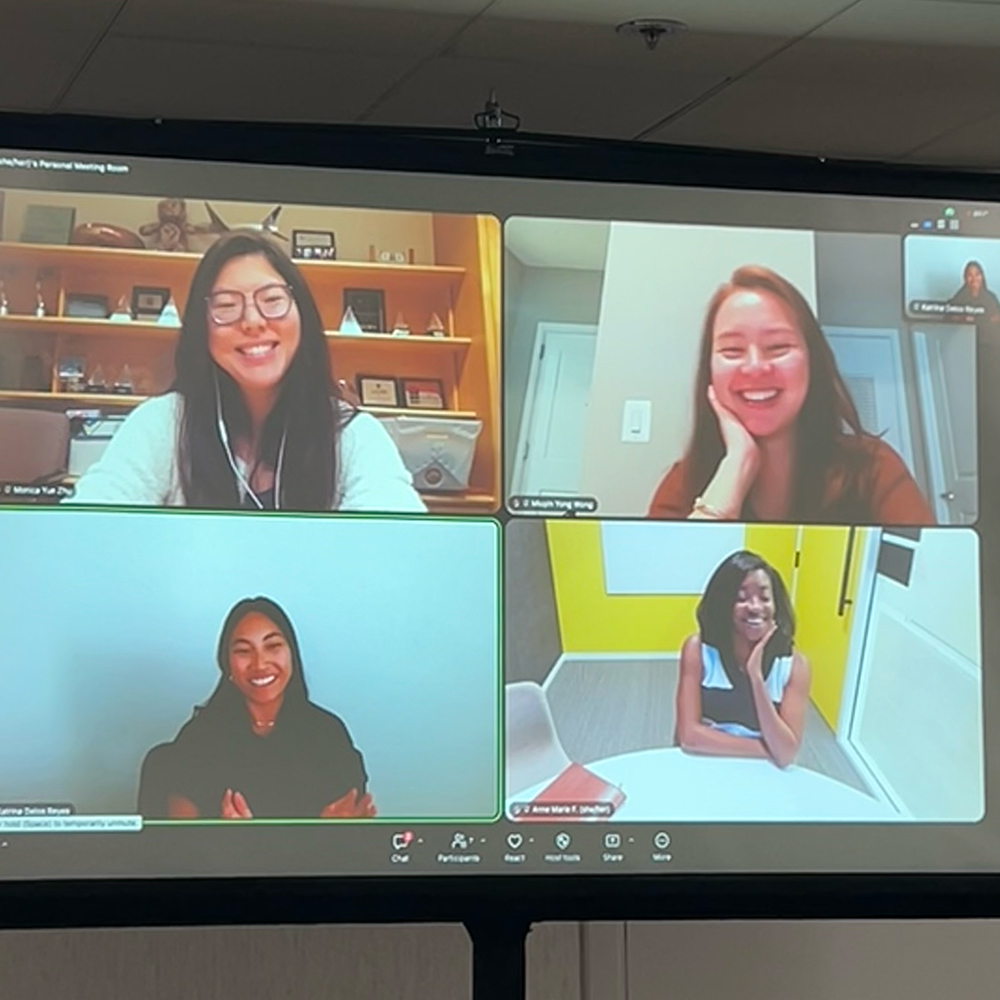
“It was great to see Computing Catalyst step up to provide a strong networking opportunity,” said Shah, who participated in several Catalyst programs as an undergrad. “I loved connecting with students, and I am reminded of myself when I see them trying to juggle so much.”
Next, the students attended a panel discussion focusing on “Navigating What’s Next” after graduation. The session featured a mix of industry partners and alums who shared their own experiences and advice on navigating the changing tech environment as women.
To close out the day, Computer Science Lecturer Elias Gonzalez (B.S. ’17, computer science; M.Ed. ’18, curriculum and instruction) led a hackathon experience where students learned how to use React code and developed apps tailored for women. In just a few hours, the students worked in groups to create apps and websites that identified well-lit paths for safe walking routes, highlighted relevant health facts behind doctors’ prescriptions, recommended music by female artists and more.
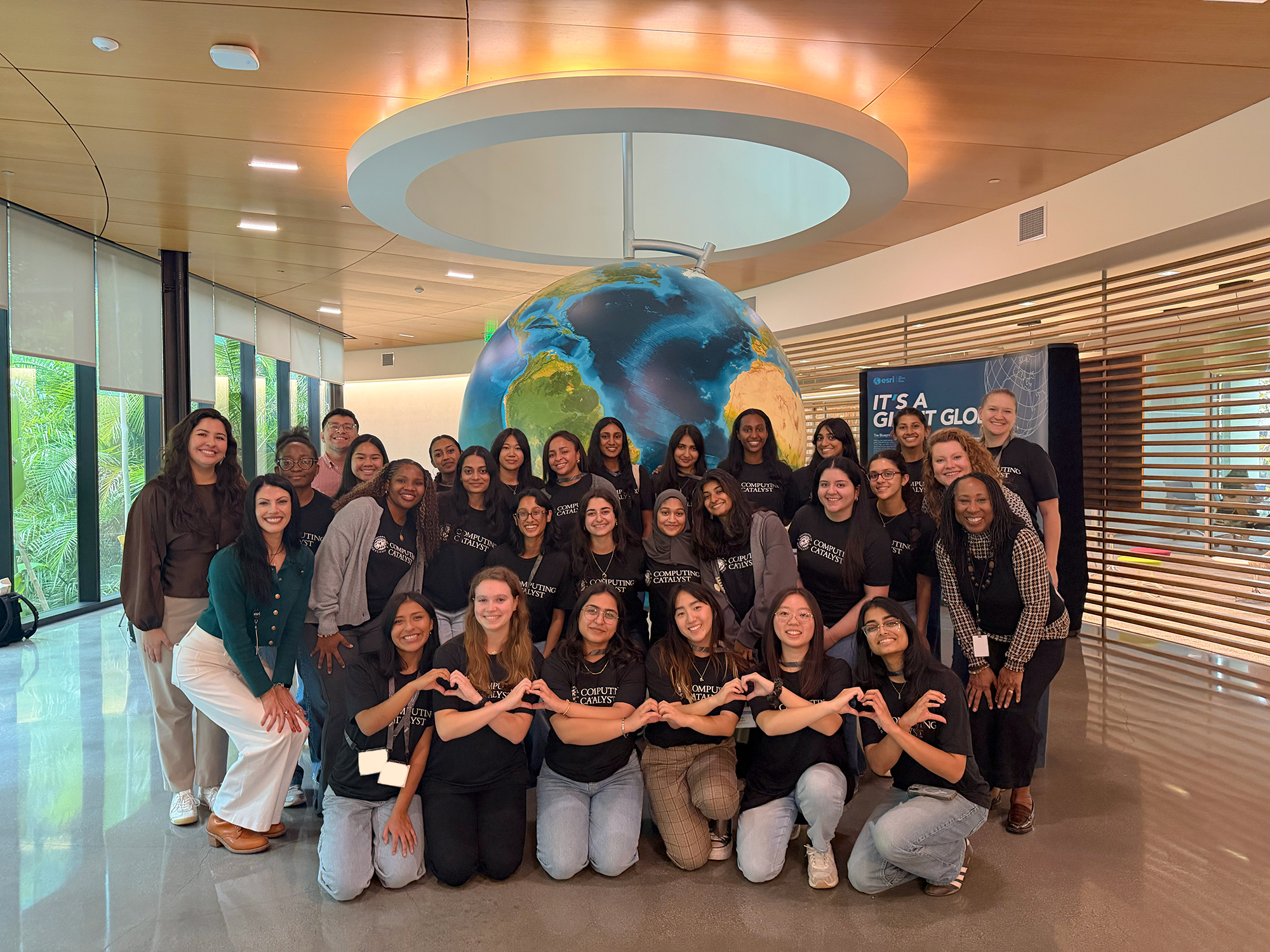
The next day, students boarded a bus that took them an hour east to Redlands, Calif., for a site visit to geographic information system (GIS) software company Esri. The Esri team also planned to attend GHC, so when they heard that the Catalyst was planning an alternative conference experience, they put together a half-day of programming for students to explore Esri career opportunities, learn about the science and art of spatial analysis and tour the campus.
“The Esri visit was one of my favorite parts of the trip,” Douglass said. “I am so grateful to them for hosting us, and I had a blast learning about GIS and the opportunities that are available to young professionals in tech.”
After an action-packed 48 hours, the C3 participants closed the program by reflecting on the Esri visit and what they gained from the conference experience.
“I heard from so many incredible people throughout the trip and learned so much at C3,” Douglass said. “But my biggest takeaway came from the amazing Computing Catalyst team. I learned that when it seems like the only option is to accept defeat, instead find strength in your community and look for alternate ways to move forward.”