Sisters Aydina and Sufyana Johnson used skills developed through UMD’s CompSciConnect to build a native plants app that gained recognition across Maryland.
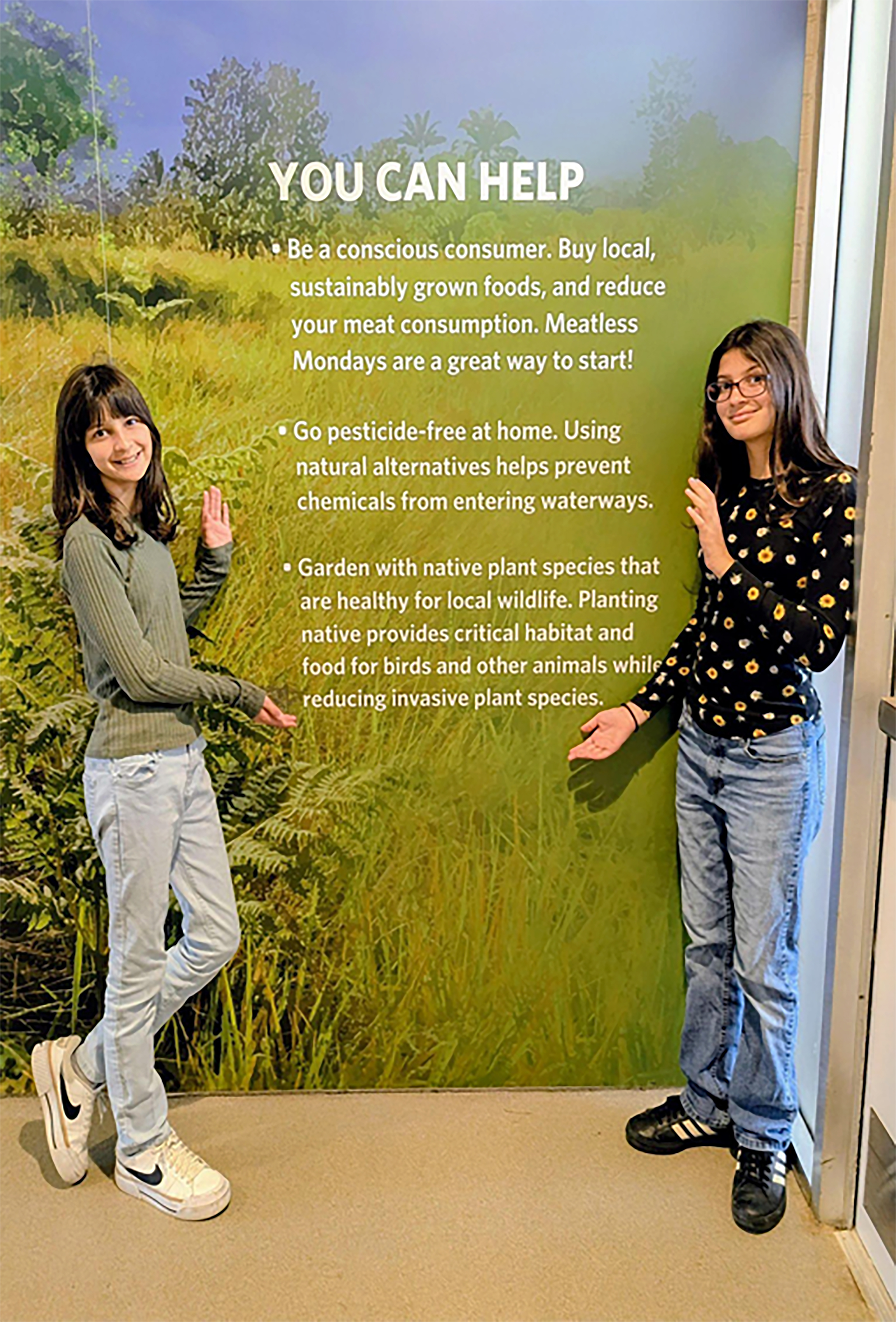
On any given day, Aydina and Sufyana Johnson might be reading, baking, hiking, riding horses or heading to karate class or choir. Like many middle and high school students, they have days shaped by school and a range of activities outside it. Over time, though, another interest began to take hold: programming, which gave both sisters a new way to channel their curiosity.
That interest found a more formal outlet through the University of Maryland’s CompSciConnect, a three-year program that introduces middle-school students to programming and related computing concepts. For the Johnson sisters, the program became a place to sharpen technical skills and think more seriously about how coding could be used beyond classroom exercises.
Over time, that foundation led to a project with a practical purpose. Drawing on what they learned through CompSciConnect and their community work, the sisters developed Maryland Native Plant Search, an app that combined coding, research and environmental problem-solving, eventually garnering recognition across Maryland.
Early Spark
Sufyana’s interest in computer science began before she joined CompSciConnect. She is the software lead for her award-winning FTC robotics team and started a computer science club at her middle school. Aydina had also been exploring coding on her own, first through Scratch and later through Khan Academy.
The sisters first heard about CompSciConnect from a classmate.
“One of the members in my robotics team had participated in CompSciConnect, and they told the team about it,” Sufyana said. “I looked more into it, I told my sister, and we both ended up doing it.”
That recommendation gave the sisters a way to build on interests they were already developing.
“I did enjoy coding a lot,” Aydina said. “When I heard about the program, I was really excited because it was a great opportunity to grow.”
Building Skills
CompSciConnect helped the sisters move from learning pieces of code to understanding how projects are built. The program introduced them to web development and other computing concepts, but its broader value came from showing how technical skills can be applied to real problems.
That shift mattered because both sisters already had some familiarity with programming languages. What they gained was a clearer sense of how to take an idea and turn it into something functional.
Sufyana said that part of the experience stood out.
“It’s one thing to have skills like knowing the language, JavaScript, and it’s another thing to be able to say, ‘I want to make this app. I want to make this web page. How can I code that and have everything that I need working together?” she said.
Aydina said the program also changed how she thought about problem-solving.
“It really did give me a whole new perspective on when you have a problem, what are some technical ways that you can solve it?” she said.
Garden Project
That perspective followed them into work outside the program. The idea for their native plants app grew out of their involvement with the Green Team at the Islamic Community Center of Potomac, where they supported environmental efforts focused on recycling, composting and gardening.
As they worked on native plant gardens, they repeatedly ran into the same challenges. Finding plants suited to specific conditions in Maryland was not always simple, and general information often did not match the needs of a particular site.
Sufyana said those challenges made the need for a more organized tool clear.
“We thought it would be nice if we could consolidate all the information specific to this region on how to plant native plant gardens that fit with a wide variety of characteristics,” she said.
The app they built allows users to browse native plants and search by factors such as soil type, sunlight needs, size and wildlife interactions.
“You can add multiple characteristics to really hone in on the correct plant for your garden,” Sufyana said.
Split Roles
Once the idea was in place, the sisters divided the work according to their interests and strengths. Sufyana handled the app’s structure and functionality, building the pages in HTML and using JavaScript to dynamically display plant information. Aydina focused on the database, gathering and organizing information about native plants suited to different parts of Maryland, along with details about animals, deer resistance and potential risks to pets and children.
Aydina said the research quickly became more involved than she had first expected.
“It was a really big job, because there’s a lot of different habitats in Maryland,” she said. “Most resources would only have plants that grow in all of Maryland. And so if you have a home in the Piedmont region, but you have plants for the coastal plain, that’s not going to really thrive.”
Sister Team
Because they worked on different parts of the project, the sisters were able to make progress without much overlap. That division helped the app move forward during the summer and throughout the school year, often in short stretches before karate class.
Aydina said the collaboration felt natural because of their relationship and the way they organized the work.
“It was pretty fun because, you know, we were obviously sisters, and so we know each other pretty well,” she said. “Since we were working on two different parts of the app, we didn’t really get into each other’s way much.”
For Sufyana, the project reinforced a lesson about teamwork and shared responsibility.
“Learning how to collaborate with a team without getting in each other’s way,” she said, “was one of the most useful parts of the experience.”
That connection to the program is also continuing in a new way. This summer, Sufyana will return to CompSciConnect as a teaching intern, helping pass along some of the coding skills and lessons she developed through the program.
Looking Ahead
The app’s reach extended well beyond the sisters’ original project goals. It was recognized by the National Wildlife Federation, the Chesapeake Bay Trust, the Montgomery County Department of Environmental Protection and the State of Maryland, which is promoting the app as part of its effort to plant 5 million trees by 2031.
For Aydina and Sufyana, that response suggested the app had become more than a coding exercise. It had also become a practical tool for people thinking more carefully about what they plant and where to plant it.
Even so, they see the app as an ongoing project rather than a finished one.
“There are still so many plants out there that we can keep adding,” Aydina said. “After that’s done, we want to expand the database so that we can maybe get other regions, maybe even the entire world, one day.”